The safest way to clean a fabric sofa is to check the manufacturer’s care instructions first, vacuum away loose dirt, patch-test any cleaner, use as little moisture as the fabric requires and let the sofa dry fully before using it again.
Different upholstery fabrics react differently to water, solvents, heat and scrubbing. A method that is suitable for one sofa may leave marks or damage another.
Check the Fabric and Care Label First
Look under the cushions or beneath the sofa for the manufacturer’s care label.
Common upholstery cleaning codes include:
- W: water-based cleaning may be suitable
- S: use a suitable solvent-based upholstery cleaner, not water
- W/S: water-based or solvent-based cleaning may be suitable
- X: avoid liquid cleaners and use vacuuming or specialist cleaning only
These codes are a guide. Always follow the manufacturer’s instructions where they are more specific.
If the fabric is unidentified or the label is missing, avoid deep cleaning until you know what treatment is suitable.
What You May Need
For basic fabric sofa cleaning at home:
- vacuum with an upholstery attachment
- clean white microfibre cloths
- plain kitchen towel
- manufacturer-approved upholstery cleaner
- cool or lukewarm water for water-safe fabrics
- dry towels
- good room ventilation
Do not mix cleaning chemicals.
How to Clean a Fabric Sofa at Home Step by Step
1. Vacuum thoroughly
Remove loose cushions where possible and vacuum the seats, seams, arms, front edge and underneath the cushions.
Removing dry dirt first helps stop it turning into residue once moisture is introduced.
2. Check for stains
Look for food marks, drink spills, grease, pet-related marks and heavily used areas.
Treat obvious stains before cleaning the wider sofa. Use a product that is suitable for both the fabric and the type of mark.
Blot rather than scrub.
3. Patch-test the cleaner
Test the product on a hidden section.
Let the area dry fully and check for:
- fading
- colour transfer
- water rings
- texture changes
- residue
Do not continue if the test area changes noticeably.
4. Clean one section at a time
For a W or W/S fabric, use a lightly damp cloth or approved upholstery cleaner. Work in small sections and avoid soaking the material.
For S-coded upholstery, use only a suitable solvent-based product.
For X-coded upholstery, avoid wet cleaning unless the manufacturer or a suitable professional confirms that it is safe.
5. Remove excess moisture
Blot the cleaned area with a fresh dry towel.
Avoid repeatedly wetting the same section. Excess water can leave tide marks and may soak into the filling beneath the fabric.
6. Let the sofa dry fully
Leave the sofa in a well-ventilated room. Keep cushions separated where practical.
Do not use the sofa until it is dry. Avoid hairdryers, heaters and other direct heat.
How to Clean a Fabric Sofa Without a Machine
You do not need an extraction machine for routine surface cleaning.
To clean a fabric sofa without a machine:
- Vacuum thoroughly.
- Check the care label.
- Patch-test the approved cleaner.
- Treat stains individually.
- Clean small sections with a lightly damp cloth where water is allowed.
- Blot away excess moisture.
- Let the sofa dry naturally.
This approach can work for light dirt and small marks on suitable fabrics. It is less appropriate for heavy soiling, widespread odours or dirt that has reached deeper into the upholstery.
When Is Steam or Extraction Cleaning Suitable?
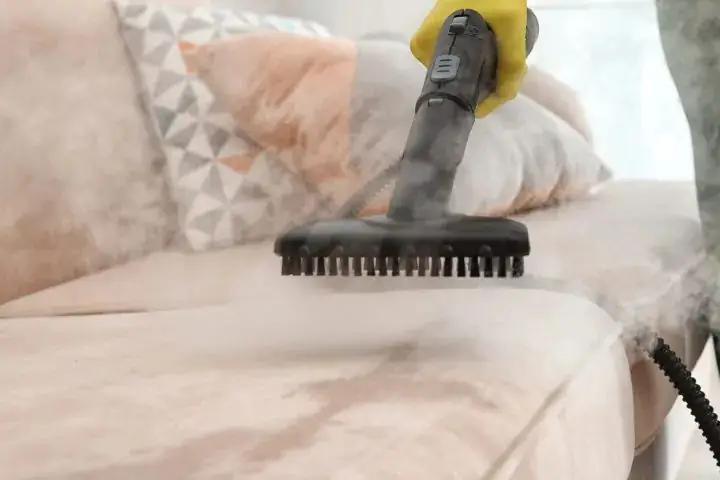
Extraction cleaning can be suitable for some water-safe synthetic fabrics because it can remove loosened soil and cleaning residue.
It is not safe for every sofa. Too much heat or moisture can affect some velvets, viscose-rich fabrics, delicate blends and unstable dyes.
Domestic steam cleaners may also deliver more heat or moisture than the upholstery can tolerate.
If the fabric is delicate, unidentified or heavily soiled, professional sofa cleaning is the safer option because the material can be assessed before a method is chosen.
Common Fabric Sofa Problems
1. Food and drink marks
Blot fresh spills quickly and use a suitable fabric-safe treatment. Avoid spreading the mark across a larger area.
2. Grease
Do not flood grease with water. Use a suitable upholstery treatment only if the care instructions allow it.
3. Pet hair
Vacuum slowly with an upholstery attachment. A soft upholstery brush may help on some fabrics, but avoid aggressive brushing on delicate or piled materials.
4. Odours
Vacuuming and ventilation may help with mild surface smells. Persistent odours from pet accidents, smoke or liquid in the filling may need deeper treatment.
No DIY or professional method can guarantee complete stain or odour removal in every case.
Mistakes to Avoid
Avoid:
- using too much water
- hard scrubbing
- hot water or direct heat
- bleach or unsuitable household products
- mixing cleaning chemicals
- skipping the patch test
- steaming an unverified fabric
- using the sofa before it is fully dry
When Is DIY Cleaning Enough?
DIY cleaning is usually suitable when the care label is clear, the fabric is in good condition and the sofa only has light surface dirt or small recent marks.
Professional cleaning is more appropriate when:
- the fabric is delicate or unidentified
- the sofa is heavily soiled
- stains cover a large area
- odours appear to come from the filling
- previous cleaning has left rings or residue
- one careful DIY attempt has not worked
Professional prices vary by sofa size, fabric, condition, location and specialist treatment. The sofa cleaning cost guide explains the main factors that affect the quote.
FAQs
1. Can I clean a fabric sofa with washing-up liquid?
Only if the manufacturer allows water-based cleaning and the product is suitable for the fabric. Washing-up liquid can leave residue if too much is used, so a proper upholstery cleaner is usually a better option.
2. How often should I clean a fabric sofa?
Vacuum it regularly and deal with spills when they happen. A deeper clean depends on use, pets, children, fabric type and visible soiling. Follow the manufacturer’s care advice rather than a fixed timetable.
3. Can I use a carpet cleaner on a fabric sofa?
Only if the machine and cleaning solution are specifically approved for upholstery and the sofa fabric is suitable for extraction cleaning. Carpet settings can use too much water for some sofas.
4. How can I remove stains from a fabric sofa?
Identify the stain, check the care instructions, blot fresh spills and patch-test a suitable treatment. Avoid hard rubbing and over-wetting. Old or previously treated stains may need professional assessment.
5. How long does a fabric sofa take to dry?
Drying time depends on the fabric, amount of moisture used, airflow, room temperature and cushion construction. Keep the sofa unused until it feels fully dry.
Need Help Cleaning a Fabric Sofa?
If you are unsure how to clean fabric sofa safely, or one careful DIY treatment has not worked, stop before repeated cleaning creates water marks, fading or residue.
Share your postcode, sofa type and clear photos to find a sofa cleaner near you and request professional help.