The safest way to clean suede sofa is to identify the material first, check the manufacturer’s care label, vacuum gently and patch-test any suitable treatment before using it on a visible area. Avoid soaking, hard scrubbing or steam unless the manufacturer specifically allows it.
Natural suede, faux suede and microsuede are different materials. A method that is suitable for one can leave watermarks, colour changes or texture damage on another.
Natural Suede, Faux Suede and Microsuede Are Different
Natural suede
Natural suede is made from animal hide and has a soft raised nap. It can be sensitive to water, oils and rubbing, so many natural suede sofas need specialist care.
Faux suede
Faux suede is a synthetic fabric designed to look like suede. Some versions tolerate water-based cleaning, while others do not.
Microsuede
Microsuede is usually a tightly woven synthetic microfibre with a suede-like finish. It can be easier to maintain than natural suede, but the care code still decides which cleaning method is suitable.
If you cannot identify the material, stop before applying liquid and check the manufacturer’s guidance or ask a professional.
Check the Care Label Before Cleaning
Look under the cushions or beneath the sofa for a care label.
Common upholstery codes include:
- W: water-based cleaning may be suitable
- S: use a suitable solvent-based upholstery cleaner, not water
- W/S: water-based or solvent-based cleaning may be suitable
- X: avoid liquid cleaners and use vacuuming or specialist cleaning only
Follow the manufacturer’s instructions where they are more specific.
Do not assume that water, steam, vinegar, bicarbonate of soda or solvent products are safe simply because they are commonly recommended online.
What You Need To Clean Suede Sofa
For basic suede sofa care:
- vacuum with a soft upholstery attachment
- clean white microfibre cloths
- plain kitchen towel
- clean suede or upholstery brush
- manufacturer-approved cleaning product
- clean dry towels
- good room ventilation
Do not mix cleaning chemicals.
How to Clean Suede Sofa Upholstery Step by Step
1. Vacuum gently
Vacuum the seats, arms, back and seams using a soft upholstery attachment. Remove loose cushions where possible.
This removes dust, crumbs and pet hair before spot treatment begins.
2. Brush lightly if suitable
A suede brush can help lift flattened fibres and remove light surface dirt from some suede-like materials.
Use light, even strokes. If the surface changes colour or texture noticeably, stop.
3. Inspect marks before cleaning
Look for fresh spills, dried marks, grease, darker high-use areas and odours.
Treat each problem according to the material and care instructions rather than applying one product across the whole sofa.
4. Patch-test the product
Apply a small amount of the approved cleaner to a hidden area.
Let it dry fully and check for:
- colour loss
- darkening
- watermarks
- stiffness
- flattened texture
Do not continue if the test area changes.
5. Spot-treat carefully
For W or W/S-coded synthetic suede, a small amount of an approved water-based upholstery cleaner may be suitable. Use minimal moisture and blot rather than scrub.
For S-coded upholstery, use only a suitable solvent-based product according to the manufacturer’s instructions.
For X-coded upholstery, avoid liquid treatment unless a suitable professional advises otherwise.
Natural suede often needs more cautious treatment. If the manufacturer does not clearly approve a home-cleaning method, professional cleaning is usually safer.
6. Let the sofa dry naturally
Allow good airflow and keep the treated area unused until fully dry.
Do not use a hairdryer, heater or steam cleaner to speed up drying.
7. Restore the texture gently
Once the upholstery is dry, a clean suede brush may help lift the nap.
Brush lightly and stop if the texture is not improving.
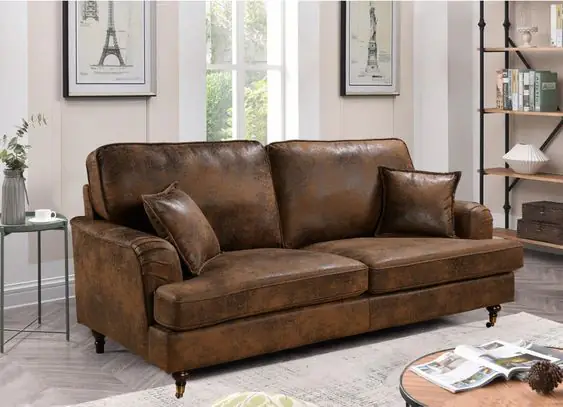
How to Clean a Faux Suede Sofa Without Flattening the Finish
Faux suede is synthetic, but that does not mean every faux suede sofa can be cleaned the same way. The care code still decides whether water-based or solvent-based cleaning is suitable.
If your sofa is marked W or W/S, start by vacuuming gently with a soft upholstery attachment, then patch-test a suitable upholstery cleaner on a hidden area. Use only a small amount of product and blot the fabric rather than scrubbing it.
For S-coded faux suede, use only a solvent-based upholstery cleaner approved by the manufacturer. X-coded upholstery should not be treated with liquid cleaner at home.
Keep moisture controlled around seams and cushion edges, where liquid can reach the filling more easily. If the fabric becomes darker, stiff, patchy or starts transferring colour to the cloth, stop cleaning and allow the area to dry.
Once the faux suede is completely dry, use a clean soft upholstery or suede brush to lift the fibres gently in one direction. This can help restore the soft, even finish without roughening the surface.
The important point is to treat faux suede as synthetic upholstery with a suede-like finish, not as natural suede and not as ordinary washable fabric.
How to Deal With Common Suede Sofa Problems
1. Fresh liquid spills
Blot immediately with a clean white cloth or plain kitchen towel.
Press gently and replace the cloth as it absorbs the liquid. Do not rub. Check the care code before adding anything else.
2. Dried marks
Vacuum or brush away loose dirt first. If the care instructions allow spot treatment, patch-test the correct product and work gradually.
3. Grease
Do not flood grease with water. Use only a product approved for the material. Stop if the mark spreads or the surface changes.
4. Everyday dirt and pet hair
Regular vacuuming is the safest first step. A soft brush may help on compatible fabrics, but avoid hard brushing on delicate natural suede.
5. Light odours
Vacuuming and ventilation may help with mild surface smells. Persistent odours from spills, pets or moisture may sit deeper in the upholstery or filling.
No DIY or professional method can guarantee that every stain, watermark or odour will disappear completely.
Why Too Much Water Can Damage Suede Sofa
Excess moisture can leave tide marks, dark patches or texture changes.
Natural suede can be particularly sensitive, but synthetic suede may also mark if it is over-wet or dries unevenly.
Only use water-based cleaning when the care label or manufacturer confirms that it is suitable.
Mistakes to Avoid
Avoid:
- hard scrubbing
- soaking the upholstery
- direct heat
- steam without checking suitability
- unsuitable household products
- mixing cleaning chemicals
- skipping the patch test
- aggressive brushing
- cleaning before identifying the material
- using the sofa before it is fully dry
When Is DIY Suede Sofa Cleaning Reasonable?
DIY care is usually reasonable when the material is clearly identified, the care label allows the method, the sofa only has light surface dirt or a small recent mark, and the patch test shows no adverse change.
Professional help is safer when:
- the sofa is natural suede
- the material or care code is unclear
- the stain is large, old or greasy
- watermarks are already present
- the texture has changed
- previous cleaning made the problem worse
- the sofa is valuable or delicate
- one careful DIY treatment has not worked
For delicate upholstery, our professional sofa cleaning allows the material to be assessed before a method is chosen.
The cost depends on sofa size, material, condition and the treatment required. Our sofa cleaning cost guide explains the main factors that affect professional cleaning prices.
Frequently Asked Questions
1. Can I use water to clean a suede sofa?
Not always. Some faux suede and microsuede fabrics marked W or W/S may allow controlled water-based cleaning. Natural suede and S or X-coded upholstery may not. Check the manufacturer’s instructions first.
2. Can faux suede be cleaned with water?
Sometimes. Faux suede marked W or W/S may allow controlled water-based cleaning, but S-coded fabric needs a suitable solvent-based method and X-coded upholstery should not be wet-cleaned at home. Always follow the sofa manufacturer's care instructions and patch-test first.
3. How do I clean a microsuede sofa?
Microsuede is usually synthetic, but cleaning methods still vary. Follow the care code, vacuum first and patch-test the correct product. Do not assume that all microsuede is water-safe.
4. Can steam cleaning damage suede?
Yes. Heat and moisture may affect the texture, color or finish of natural and synthetic suede materials. Do not steam clean a suede sofa unless the manufacturer confirms that it is suitable.
5. Can all stains and watermarks be removed from suede?
No. Results depend on the material, stain type, age, previous cleaning attempts and whether the upholstery has already been damaged.
Need Help Cleaning a Suede Sofa?
If you are unsure how to clean suede sofa upholstery safely, or the material is delicate, unidentified or already marked, stop before repeated DIY treatment causes further damage.
Share your postcode, sofa type and clear photos to find a sofa cleaner near you and request professional help.