If you have just spilled wine on your sofa, blot it immediately with a clean white cloth or plain kitchen towel. Press gently to absorb as much liquid as possible. Do not rub. Before using water or any cleaning product, check the sofa’s care label and test the treatment on a hidden area.
A fresh stain is usually easier to treat than a dried or old one. The safest method also depends on the fabric.
How to Remove a Wine Stain From a Sofa Step by Step
1. Blot the spill
Press a clean absorbent cloth onto the wine and replace it as it becomes wet. Work from the outside of the stain towards the centre.
Do not scrub. Rubbing can spread the wine and push it deeper into the fibres.
2. Check the sofa care label
Follow the manufacturer’s cleaning instructions before adding moisture.
Common upholstery codes include:
- W: water-based cleaning may be suitable
- S: use a suitable solvent-based upholstery cleaner, not water
- W/S: water-based or solvent-based treatment may be suitable
- X: avoid liquid cleaners unless the manufacturer advises otherwise
If there is no label or you cannot identify the fabric, avoid experimenting with several products.
3. Test a hidden area
Apply a small amount of the intended treatment somewhere inconspicuous. Let it dry fully and check for colour loss, rings, texture changes or pile damage.
4. Treat only if the fabric allows it
For a W or W/S fabric, a small amount of cool or lukewarm water may help after blotting. Use a damp cloth rather than soaking the sofa.
If the manufacturer allows an upholstery cleaner, follow its instructions and use only the amount needed.
For an S-coded sofa, use only a suitable solvent-based upholstery product. If you are unsure, stop and seek professional advice.
Never mix cleaning products.
5. Remove excess moisture
Blot with a fresh dry cloth. Avoid repeatedly soaking the same area because too much water can leave rings or reach the cushion filling.
6. Let the sofa dry naturally
Allow good airflow and keep the treated area unused until dry. Do not use a hairdryer, steam cleaner or direct heat.
Fresh, Dried and Old Red Wine Stains
Fresh red wine stain
Blot immediately. If the care instructions allow water-based cleaning, use the suitable method above with as little moisture as possible.
Do not keep applying products simply because some colour remains.
Dried wine stain
A dried wine stain is harder to treat. Do not scrub it.
On a water-safe fabric, controlled moisture and an approved upholstery cleaner may help. Test first and stop if the stain spreads or the fabric changes colour.
Old red wine stain
An old stain may have been affected by previous cleaning attempts, sunlight or products already applied.
Professional treatment may improve it, but complete removal cannot be guaranteed. Results depend on the fibre, dye and age of the stain.
Common Wine-Stain Methods: What May Help?
1. Water
A little cool or lukewarm water may help on W or W/S fabrics. Too much can leave tide marks or soak the cushion filling.
2. Upholstery cleaner
A manufacturer-approved upholstery stain remover may help on compatible fabrics. Follow the instructions and test it first.
3. White vinegar
Vinegar is commonly suggested online, but it can affect some dyes and finishes. Use it only if the manufacturer or product instructions confirm it is suitable.
4. Bicarbonate of soda or salt
These powders may absorb moisture but can leave residue in textured upholstery. Blotting is usually a more controlled first step.
5. White wine
Pouring white wine onto red wine is not a reliable upholstery-cleaning method. It adds more liquid without removing the original stain.
6. Bleach or peroxide products
Avoid household bleach. Peroxide-based products can also lighten dyes unless specifically approved for the sofa fabric.
What About Velvet or Delicate Upholstery?
Velvet needs extra care because moisture and rubbing can affect its pile. Blot gently, follow the care instructions and avoid soaking or brushing the fabric while wet.
Silk blends, viscose, antique upholstery and unidentified materials should also be treated cautiously. If the sofa is valuable, delicate or has no clear care instructions, it is often safer to stop after blotting and arrange professional sofa cleaning.
What Not to Do
Avoid:
- rubbing or scrubbing
- soaking the fabric
- using hot water or direct heat
- mixing cleaning chemicals
- applying bleach
- using several stain removers one after another
- treating an unidentified fabric without testing
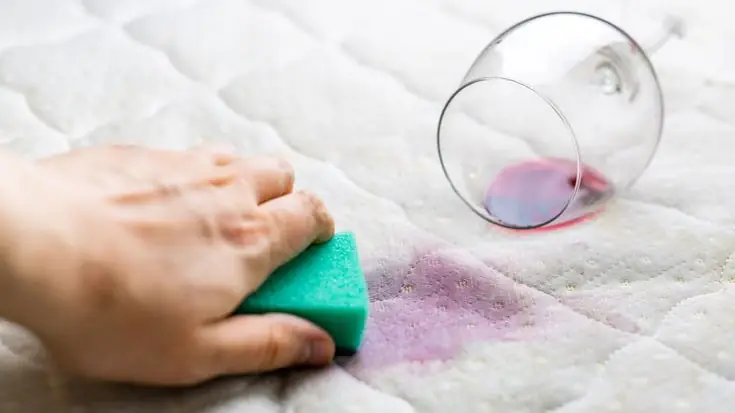
When Should You Stop DIY Treatment?
Stop and consider professional help if:
- the fabric is delicate, unidentified or unsuitable for water
- colour transfers onto your cloth
- a water ring or pale patch appears
- the stain spreads
- wine has soaked into the cushion
- the stain is old or has already been treated several times
- one careful treatment has not improved it
A professional cleaner can assess the fabric and previous treatment before choosing a suitable method. Prices vary by sofa size, material, location and stain condition. Our sofa cleaning cost guide explains the main factors that affect professional cleaning prices.
FAQs About Red Wine Stains on Sofas
1. Can you remove red wine from a sofa after it has dried?
Sometimes. A dried wine stain may improve on a colorfast, water-safe fabric, but results vary. Do not scrub it. Check the care label, test first and stop if the fabric starts to mark or lose color.
2. Does bicarbonate of soda remove red wine from a sofa?
It may absorb some fresh moisture, but it is not a guaranteed stain remover and can leave powder trapped in textured upholstery. Blotting first is usually safer.
3. Can I use washing-up liquid on a red wine stain?
Only if the care instructions allow water-based cleaning and the product is suitable for the fabric. Too much detergent can leave residue. An upholstery cleaner approved for the material is a better choice.
4. Should I use hot or cold water?
Avoid hot water. If the sofa is suitable for water-based cleaning, use a small amount of cool or lukewarm water and avoid saturating the fabric.
5. Will professional cleaning remove an old wine stain completely?
Not always. Professional sofa stain removal can improve many stains, but no responsible cleaner should guarantee complete removal. Results depend on the fabric, stain age, dye and previous cleaning attempts.
Need Help Removing a Wine Stain From Your Sofa?
If DIY treatment is unsuitable or the stain remains after one careful attempt, stop before repeated cleaning causes further marking.
When you need help with how to remove a wine stain from a sofa, share the sofa type, postcode and clear photos so the job can be assessed properly. You can find a sofa cleaner near you and request professional help.