If you are trying to remove water stains from sofa, first check the care label and identify the fabric. Test any suitable method on a hidden area before treating the visible mark. Use very little moisture, blot rather than rub, and let the area dry fully before deciding whether it has improved.
A visible ring is not always caused by water alone. Mineral deposits, cleaning-product residue, fabric browning, dye movement and uneven drying can all leave similar marks.
Why Does Water Leave Stains on a Sofa?
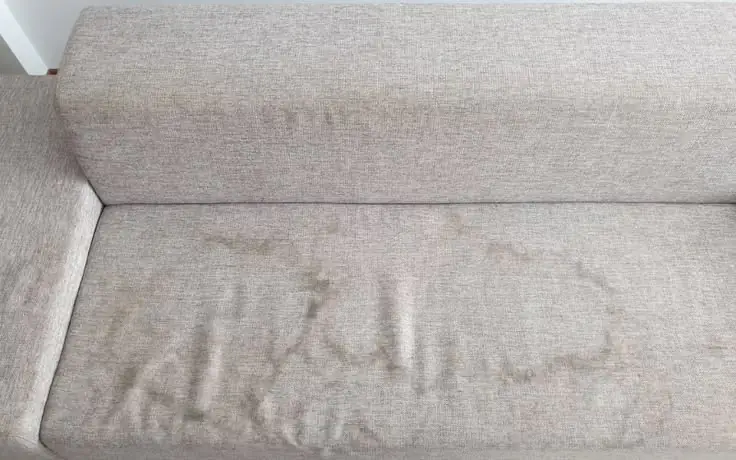
A water ring often forms because moisture carries dirt, minerals or cleaning residue towards the edge of a damp area as it dries. Once the water evaporates, those materials can remain behind as a darker or lighter outline.
Tap water can also leave mineral residue on some fabrics. Certain natural fibres may brown or shift color when wet. Previous cleaning products can also dry unevenly and leave a visible ring.
That is why the first step is identifying the likely cause rather than simply adding more water.
Before You Try to Remove the Mark
Check these points first:
- Read the manufacturer’s care instructions.
- Identify the upholstery material if possible.
- Check the cleaning code: W, S, W/S or X.
- Test for colour transfer with a clean white cloth.
- Vacuum loose dust and debris.
- Photograph the mark before treatment.
A W code usually means water-based cleaning may be suitable. S indicates solvent-based cleaning. W/S may allow either, while X generally means vacuuming or specialist cleaning only.
Do not apply water to an S or X fabric unless the manufacturer specifically allows it.
How to Remove Water Stains from Sofa Fabric Safely
The following method is only for upholstery confirmed as suitable for water-based cleaning.
1. Vacuum the affected area
Use a soft upholstery attachment to remove dust, crumbs and loose dirt.
2. Prepare clean cloths and a suitable cleaner
Use clean white microfibre cloths and a manufacturer-approved upholstery cleaner. Avoid coloured cloths because dye may transfer when damp.
3. Test out of sight
Apply a small amount of the treatment to a hidden area. Let it dry fully and check for fading, colour movement, stiffness or texture change.
4. Apply minimal moisture
Dampen the cloth rather than soaking the upholstery. Too much liquid can spread the mark, reach the cushion filling or create a larger tide line.
5. Blot gently
Use light pressure and do not scrub. Blotting helps lift residue without pushing it deeper into the fibres.
6. Feather beyond the visible ring
Where the care instructions allow, work slightly beyond the edge of the mark rather than treating only the darkest line. This can help the area dry more evenly.
7. Remove excess moisture
Use a clean dry towel to absorb as much moisture as possible.
8. Let it dry naturally
Allow even airflow. Avoid direct heat and do not sit on the treated area while it is damp.
9. Reassess when fully dry
A damp sofa can look darker even when the treatment is working. Wait until it is completely dry before deciding whether another step is needed.
Repeatedly treating a damp sofa can enlarge the mark or create new rings.
Choose the Right Response for the Type of Stain
Not every water mark needs the same treatment. The likely cause and the way the fabric reacts should guide what you do next.
Fresh spill
If the mark has just happened, start by blotting the liquid with a clean, absorbent cloth and check the sofa’s care label before applying anything else. Stop if colour begins to transfer from the upholstery.
Dried water ring
A dried ring is often caused by uneven drying or surface dirt moving to the edge of the damp area. Only attempt further treatment if the fabric is confirmed as water-safe. Stop if the ring becomes wider or more noticeable.
Hard-water residue
Minerals left behind as tap water dries can create a pale or darker outline on some fabrics. Use only a method approved by the sofa manufacturer. Stop if the fabric starts to lighten, stiffen or change texture.
Marks left after DIY cleaning
If a water mark appeared after home cleaning, residue or over-wetting may be the real problem. Avoid adding more cleaner straight away. Repeated treatment can make the affected area larger or create another ring.
Discolouration on delicate fabric
Velvet, viscose, linen blends and other delicate upholstery can develop browning, dye movement or texture changes after moisture exposure. Further wet cleaning can make the problem worse, so specialist assessment is usually the safer next step.
Can You Treat Water Marks on Delicate Fabrics?
Velvet, suede, viscose, linen and unidentified upholstery need extra caution.
Excess moisture or aggressive cleaning can cause pile distortion, shrinkage, colour loss, tide marks and texture changes.
If the sofa is delicate, valuable or difficult to identify, our professional sofa cleaning is often the safer route because the material can be assessed before treatment begins.
Do not assume that steam, vinegar, bicarbonate of soda, water or a solvent cleaner is safe for every fabric.
Common Methods That Can Make the Stain Worse
Avoid:
- oversoaking the upholstery
- forceful scrubbing
- using a hairdryer or heater
- steam cleaning without checking fabric suitability
- fragranced sprays to mask odours
- washing removable covers without checking the label
- applying several cleaning products one after another
A dried water mark on sofa fabric can become more noticeable if it is repeatedly wet and dried unevenly.
When Professional Sofa Cleaning Is Worthwhile
Professional help may be appropriate when:
- the care code is S or X
- the material is delicate or unidentified
- the mark covers a large area
- dye transfers onto the test cloth
- the upholstery has changed colour or texture
- earlier cleaning enlarged the stain
- the sofa is expensive, antique or under warranty
A professional can assess whether the mark is caused by residue, browning, dye movement or another issue before choosing a treatment.
If you are weighing up specialist treatment, our guide to typical sofa cleaning costs explains the main factors that affect pricing.
FAQs
1. Are water stains on sofas permanent?
Not always. Some water rings can improve with careful treatment, while others involve fibre changes, dye movement or previous cleaning damage. Results depend on the fabric and the cause.
2. Why does the water mark return after drying?
Residue, minerals or soil may still be in the fabric and move towards the edge as it dries. Re-wetting without addressing the cause can repeat the problem.
3. Can I use a hairdryer to dry the sofa?
It is better to avoid direct heat. A hairdryer can dry the surface unevenly and may affect some fibres or dyes. Use natural ventilation instead.
4. Should I clean the entire cushion?
Not automatically. On some water-safe fabrics, treating a wider area can help with even drying, but only if the manufacturer allows it. Do not wet an entire cushion without checking the fabric and filling.
5. Can a professional remove an old water ring?
Sometimes, but complete removal cannot be guaranteed. An old mark may involve mineral residue, browning, dye loss or previous cleaning damage.
Final Advice
When deciding how to remove water stains from sofa, start with the care label, identify the fabric, patch-test and use the least aggressive suitable method. Stop if the color, texture or size of the mark changes.
If the stain keeps returning or earlier treatment made it worse, you can find a sofa cleaner near you and ask for the mark to be assessed before trying anything else.