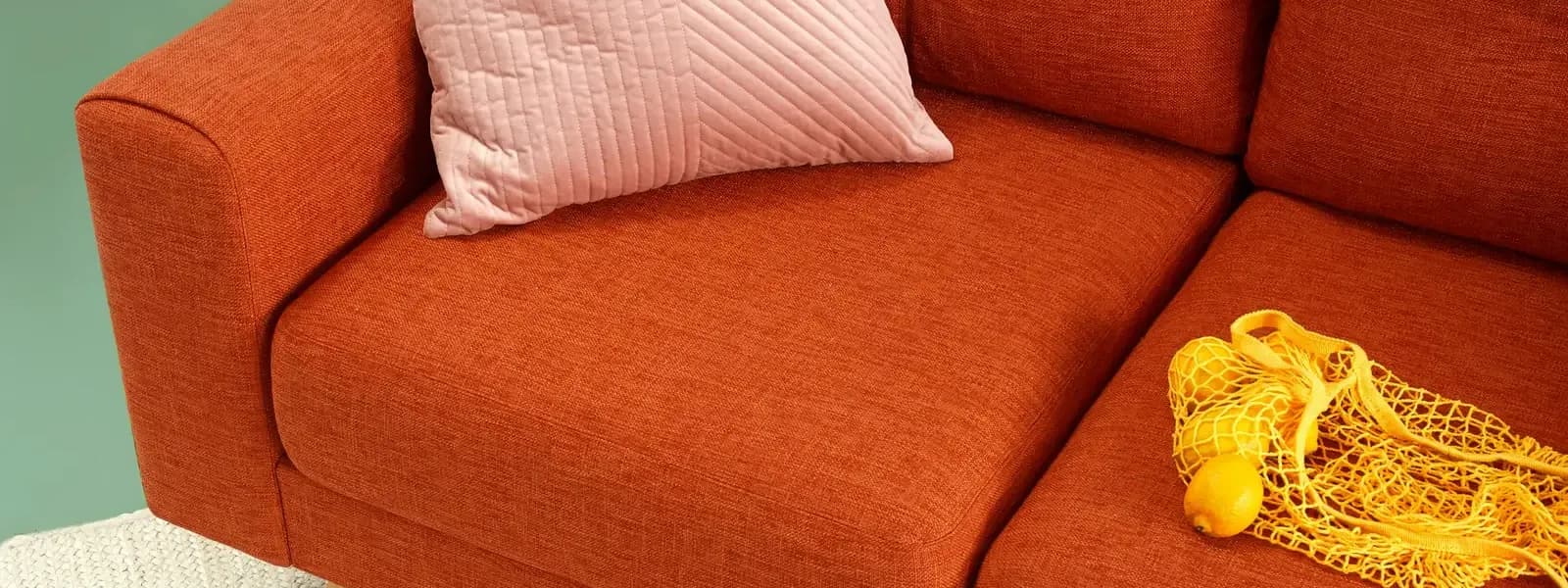
To clean a velvet sofa starts with understanding the fabric. Velvet has a raised pile that gives it its soft finish and changing sheen, but that pile can flatten, mark or change direction if it is scrubbed, over-wet or exposed to unsuitable heat.
For most velvet sofas, routine care should begin dry: remove loose dirt, brush the pile gently and only use moisture or a cleaning product when the manufacturer's instructions allow it.
Why Velvet Needs More Care Than Standard Upholstery
A dark or uneven patch on velvet is not always dirt. The pile can look lighter or darker depending on its direction, pressure and how it catches the light.
Before treating a mark, brush the area gently with a clean, soft upholstery or velvet brush. If the appearance changes as the pile lifts, the problem may be pressure or shading rather than a stain.
This matters because unnecessary wet cleaning can leave water marks or disturb the pile.
Check the Fabric and Care Label Before Cleaning
Velvet can be made from polyester, cotton, viscose, silk or blends, and each can respond differently to water and cleaning products.
Check:
- the manufacturer's care instructions
- the fibre composition, if shown
- any upholstery cleaning code
- whether removable covers are actually washable
- a hidden test area before using a new product
If your sofa uses care codes, W may allow water-based cleaning, S usually indicates solvent-based care, W/S may allow either, and X generally means dry maintenance or specialist cleaning only.
Do not assume every velvet sofa can be cleaned in the same way.
How to Clean a Velvet Sofa at Home
For routine maintenance, the aim is to remove loose dust without crushing the pile.
- Clear the sofa. Remove throws, cushions and loose items. Check seams and gaps for crumbs and grit.
- Brush gently. Use a clean, soft brush and work with the natural direction of the pile. Avoid aggressive back-and-forth scrubbing.
- Remove loose dust. Follow the sofa manufacturer's advice. Some velvet sofas can be vacuumed carefully with a clean upholstery attachment and low suction, while some deep-pile velvets are better maintained with a soft brush or cloth.
- Inspect stains separately. Do not wet-clean the whole sofa because one area is marked.
- Allow treated areas to dry naturally. Avoid radiators, hairdryers and direct heat.
- Reset the pile once dry. If brushing is permitted, make a light final pass in the natural pile direction.
For a dusty sofa, dry maintenance may be enough. See how often you should clean your sofa for deeper-cleaning guidance.
How to Deal With Spills and Stains on Velvet Sofa
Fresh spills should be blotted quickly with a clean white absorbent cloth.
Press and lift rather than rubbing across the surface. Rubbing can spread the liquid and flatten the pile.
If the sofa is approved for water-based spot cleaning, use a small amount of a manufacturer-approved upholstery cleaner. Apply it to the cloth rather than pouring liquid directly onto the sofa, and test it on a hidden area first.
If the velvet is solvent-only, professional-clean-only or particularly delicate, stop before adding water.
Different stains need different treatment. For stubborn marks, see SofaCleaner's stain removal service.
If previous cleaning has left a visible ring, the guide to removing water stains from a sofa explains why adding more moisture can make the mark larger.
Flattened Pile and Pressure Marks
Seat fronts, armrests and heavily used sections can develop darker-looking patches as the pile becomes compressed.
Start by removing loose dust and brushing the area gently. If the appearance improves, the issue may be pile direction rather than embedded dirt.
Rotate reversible cushions where the manufacturer allows it so the same areas are not always under pressure.
Do not use a stiff brush or aggressive scrubbing. Delicate velvet can be permanently changed by rough treatment.
Steam Cleaning and Products to Avoid
Steam is not a default cleaning method for velvet.
Some manufacturers allow light steam for pressure marks, while others recommend professional cleaning only. Heat and moisture can distort the pile or create water marks on unsuitable fabrics.
Only use steam when the sofa manufacturer's instructions specifically allow it. For more detail, read how to steam clean a sofa safely.
Also avoid treating vinegar, bicarbonate of soda, washing-up liquid, bleach or carpet shampoo as universal velvet cleaners. These products can leave residue, affect colour or require rinsing that the upholstery may not tolerate.
The safest method is the one approved for your specific velvet.
When Professional Velvet Cleaning Makes Sense
Professional assessment is more appropriate when:
- the care label says professional cleaning only
- the velvet fibre is unknown
- the sofa is silk or viscose-rich
- several cushions are heavily soiled
- water marks or texture changes have appeared
- a stain has already been treated with several products
- dye transfers onto a test cloth
SofaCleaner provides velvet sofa cleaning for jobs where the pile, fibre and existing marks need to be considered before treatment. For mixed upholstery, see the broader upholstery cleaning service.
Frequently Asked Questions
1. Can you clean a velvet sofa with water?
Only when the manufacturer says the velvet is suitable for water-based cleaning. Use minimal moisture and avoid soaking the pile or cushion filling.
2. Can you vacuum a velvet sofa?
Sometimes. Follow the manufacturer's instructions. Some velvet can be vacuumed carefully with a suitable upholstery attachment, while some deep-pile velvet is better maintained with a soft brush.
3. How do you restore velvet pile after cleaning?
Let the fabric dry fully first. If the manufacturer allows brushing, use a clean soft brush and work gently in the natural pile direction.
Need Help With a Velvet Sofa That Still Looks Marked?
If the pile still looks uneven, a stain has not lifted or the care label is unclear, avoid adding more moisture or trying another product at random.
Share your postcode, clear photos of the sofa and the problem area, plus the fabric or care label to find a sofa cleaner near you. This gives the cleaner a better idea of the material, condition and likely treatment before anything is booked.