To remove blood stains from a sofa, the safest starting point is to blot the stain, use cold rather than hot water where the fabric allows it, and keep moisture to a minimum.
Fresh blood is usually easier to remove than dried blood. The main risks are rubbing the stain deeper into the fibres, using heat, over-wetting the cushion or applying a product that damages the sofa fabric.
If the blood is not yours or its source is unknown, wear disposable gloves and avoid direct skin contact. Larger spills or blood that has soaked deeply into the filling may need specialist decontamination rather than normal upholstery cleaning.
Why Blood Stains Need Careful Treatment
Blood is a protein-based stain. Heat can make protein stains more difficult to remove, which is why hot water, steam and direct heat should not be the first treatment.
A sofa also behaves differently from washable clothing. Even where the surface fabric can tolerate water, the backing, foam and padding should not be soaked.
Before treating the stain, check the manufacturer's care instructions and upholstery cleaning code where available:
- W: water-based cleaning may be suitable
- S: use an appropriate solvent-based method rather than water
- W/S: either may be suitable, depending on the fabric and product
- X: vacuuming or specialist cleaning only
If the fabric is unknown, delicate or marked S or X, avoid experimenting with water-based home remedies.
How to Remove Fresh Blood From a Sofa
Act while the stain is still fresh if you can.
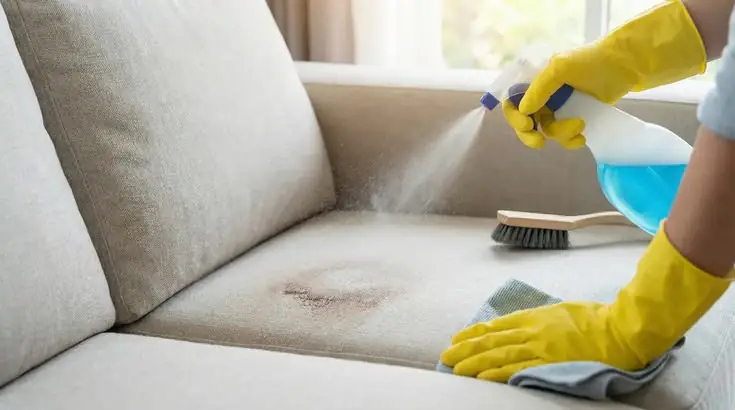
First, use a clean white cloth or plain white kitchen towel to blot up as much blood as possible. Press lightly, lift the cloth and move to a clean section each time. Do not scrub or rub from side to side.
For upholstery confirmed as water-safe, dampen another white cloth with cold water. The cloth should be damp rather than dripping.
Blot from the outside of the stain towards the centre. This helps reduce spreading. Do not pour water directly onto the sofa.
If the mark remains, use a small amount of a manufacturer-approved upholstery stain remover that is suitable for the fabric. Patch-test it on a hidden area first and allow the test area to dry before treating the visible stain.
A simple method is:
- blot away excess blood
- check the care label and fabric type
- use a small amount of cold water only if the sofa is water-safe
- apply a suitable upholstery stain treatment if needed
- blot gently rather than scrub
- remove residue according to the product instructions
- press with a dry towel and allow the area to dry naturally
The aim is to treat the stained fibres without soaking the cushion.
Too much water can leave a tide mark after the blood has gone. If that happens, see the guide to removing water stains from a sofa.
How to Remove Dried Blood From Sofa Upholstery
Dried blood usually takes longer because the residue has settled into the fibres.
Do not scrape the fabric aggressively and do not try to soften the stain with hot water.
On water-safe upholstery, lightly dampen a white cloth with cold water and hold it against the stained area briefly. Blot away anything that begins to transfer.
If cold water is not enough, use an upholstery-approved stain treatment. Some products designed for protein stains use enzymes, but a laundry pre-treatment is not automatically suitable for fixed sofa upholstery.
Follow the product's instructions carefully and allow the fabric to dry completely before deciding whether another treatment is needed.
Repeatedly applying different products while the sofa is still damp increases the risk of colour change, residue and water marking.
Treat the Sofa According to the Fabric
The same blood-stain method will not suit every sofa.
Synthetic fabric: Many polyester and synthetic blends can tolerate controlled water-based treatment when marked W or W/S. Use minimal moisture and patch-test first.
Wool and natural fibres: These can be more sensitive to moisture, alkalinity, shrinkage and colour movement. Stick to products approved for the material.
Velvet and piled upholstery: Rubbing or over-wetting can disturb the pile even if the stain itself improves. Use extra caution.
Leather: Do not treat leather like woven upholstery. Use leather-specific cleaning guidance and avoid soaking the surface. The leather sofa care guide explains the different approach.
Unknown fabric: If you cannot identify the material or cleaning code, stop before adding chemicals.
What Not to Use on a Blood Stain
A strong product is not automatically a better stain remover.
Avoid using hot water or steam on an untreated blood stain. Heat can make protein-based staining harder to remove. If you plan to steam-clean the sofa later, first check the fabric and read the guide to steam cleaning a sofa safely.
Hydrogen peroxide is frequently recommended online, but it can lighten some dyes and affect finishes. It should not be treated as a universal upholstery remedy.
Chlorine bleach can permanently remove colour and damage fibres. Vinegar, bicarbonate of soda and ammonia can also cause problems on some upholstery materials.
Do not mix cleaning products. Some chemical combinations can create harmful fumes as well as damage the sofa.
One suitable, fabric-approved treatment is safer than cycling through several home remedies.
When to Stop DIY Blood Stain Removal
Stop treating the area if:
- colour transfers from the sofa onto your cloth
- the fabric becomes lighter, darker or stiff
- the stain begins to spread
- a water ring appears
- velvet or another pile fabric changes texture
- liquid has soaked into the cushion filling
- you have already applied several different products
- you cannot confirm that the upholstery is suitable for the method
If a previous treatment has already changed the colour or texture, another chemical is unlikely to make the result more predictable.
This is the same reason repeated solvent use can make other difficult marks worse. See the guide to removing ink stains from fabric upholstery for a similar controlled approach.
When a Blood Spill Needs More Than Stain Cleaning
A small household blood mark is different from a large or unknown-source blood spill.
UK Health and Safety Executive guidance notes that blood can carry microorganisms and that absorbent or fixed materials can be difficult to decontaminate fully.
If the spill is extensive, the source is unknown or blood has soaked deep into foam or padding, routine sofa stain cleaning may not be enough. Specialist decontamination advice may be more appropriate.
For a normal residual blood mark on suitable upholstery, professional stain removal can be considered. Tell the cleaner what caused the stain and which products have already been used.
Professional Treatment for a Blood Stain That Will Not Lift
A professional cleaner may be able to improve fresh or dried blood staining, but complete removal cannot be guaranteed.
The likely result depends on the age of the stain, the sofa material, previous treatment, whether heat has been used and whether the blood has penetrated beyond the surface fabric.
A cleaner can assess the fabric before choosing a targeted treatment rather than repeatedly applying general household products.
If the blood mark is part of broader staining or general soiling, fabric sofa cleaning may be more appropriate. You can also check the sofa cleaning cost guide to understand the main factors that affect professional pricing.
Frequently Asked Questions
1. Can dried blood be removed from a sofa?
It can often be improved, particularly if the sofa is water-safe and the fabric has not already been damaged by heat or unsuitable products. Use cold water sparingly and an upholstery-approved treatment where necessary.
2. Is cold water best for blood stains on a sofa?
Cold water is the normal starting point for blood on upholstery that allows water-based cleaning. Avoid pouring water onto the sofa and do not use water on an S or X fabric unless the manufacturer permits it.
3. Can I use hydrogen peroxide to remove blood from a sofa?
Do not assume hydrogen peroxide is safe for your upholstery. It can lighten dyes or alter some finishes. Use it only where the manufacturer or an appropriate upholstery product specifically supports the method.
4. Can I steam-clean a blood stain?
Do not use steam as the first treatment for blood. Heat can make protein stains harder to remove, and some upholstery cannot tolerate the moisture or temperature involved.
Need Help With a Blood Stain That Will Not Come Out?
If the stain remains after a suitable treatment, let the sofa dry completely before trying anything else.
Share the fabric, your postcode, photos of the affected area and details of any products already used to find a sofa cleaner that can understand the job before treatment.